
When I was introduced to Fear Free at its inception, it changed everything. I believe the best work starts with an unmistakable why, and mine is simple: it’s the cats. Getting to work for an organization that gives care providers the tools to make an experience better is one of the great honors of my career.
To me, a happy cat is a simple thing: one who walks out of the carrier on her own, takes a treat during the visit and goes home to her normal routines instead of hiding under the bed for the rest of the day. For a long time, that kind of veterinary visit felt more like wishful thinking than reality. Cats were expected to arrive frightened and resist handling, and their fear was often dismissed as a cat having an “attitude” or being “fractious” or, more recently, “spicy,” when in reality they were communicating Fear, Anxiety and Stress (FAS).
Today, that expectation is changing. Advances in feline behavior science, clinic design and client education are showing that veterinary visits don’t have to be stressful to be successful, and practices embracing Fear Free principles are proving it every day.
For many clinics, that transformation has been realized through Fear Free Certified Veterinary Practice status: a comprehensive, whole-team commitment to reducing fear and stress at every touchpoint of the veterinary visit. More than a certification, it’s a shift in culture that is redefining what feline medicine can look and feel like.
Start with the cats who never make it through the door
Here is the uncomfortable truth behind so many quiet exam rooms: most cats simply aren’t coming in. CATalyst Council estimates that only about one in three cats receives regular veterinary care, compared with roughly seven in ten dogs,¹ which means close to 70% of cats are missing the preventive care they need.²
Close to 70% of cats are missing the preventive care they need.
When researchers asked owners why, the answer was rarely indifference. In the 2026 State of the Cat Report,¹ the largest feline household survey ever conducted in the United States, owners named stress, for both the cat and themselves, as a leading barrier to care. They also pointed to easier carrier strategies and calmer, lower-stress clinic environments as the things that would genuinely help.
More than two-thirds of cat owners say they would seek more care if they believed it would extend their cat’s life.¹ The people who love these cats want to do right by them. What so often stands in the way is the visit itself, and that is precisely the part we can change.
What Fear Free really means
This year, Fear Free celebrates its 10th anniversary, a decade of reshaping how veterinary teams think about the emotional and wellbeing lives of their patients. The premise is simple: a cat’s emotional wellbeing matters as much as its physical health. A frightened cat doesn’t just suffer; it hides pain, spikes its own vital signs, making accurate diagnostics harder to get. Fear Free trains teams to recognize FAS and prevent it, starting with the basics: a quiet space, a warm surface, a lickable treat. It extends to calming pheromones, keeping the owner nearby and pre-visit medication when it helps. And it starts even before the visit, with client education that begins at home, before the cat ever leaves the house.
A membership that keeps teams learning
Certification is more approachable than many teams expect, and it is only the beginning. At its heart, Fear Free is a membership community built around lifelong learning. That means continuing education, of course, but also handling tools and client-facing resources, all of it expanding over time.
It starts with individual training, developed by board-certified veterinary behaviorists, that any team member can complete. From there, it grows into whole-practice certification woven through a clinic’s culture, team and every visit. The point is always the same: this isn’t a finish line. It’s the start of an ongoing journey, one incremental change at a time, toward care that’s genuinely more compassionate.
That matters more now than ever. Fear Free recently redesigned the canine and feline professional certification course to fit the pace of a busy practice: the same core principles, now delivered in short, five to 25-minute modules. Add in new feline-specific courses and webinars, so teams have more ways than ever to build a stronger bond with clients and their cats.
What certification changes: Patients, clients and teams
The benefits show up on every side of the exam table. Calmer cats make for smoother visits and easier handling for the whole team. Clients notice the difference and come to trust it, and that trust translates into follow-through on the care their cats need to thrive.
But the case that stays with me is the one for the people who do this work. Veterinary medicine carries one of the highest injury rates in healthcare, more than five times the national average, much of it tied to handling methods that can increase FAS in patients.
An independent five-year analysis of 82 practices found that Fear Free Certified Practices reported 22% fewer workplace injuries overall, including 24% fewer bites and scratches.³
An independent five-year analysis of 82 practices found that Fear Free Certified Practices reported 22% fewer workplace injuries overall, including 24% fewer bites and scratches.
A separate peer-reviewed study in JAVMA found this injury-reducing effect strongest when the whole team is trained: practices where every staff member was certified saw roughly 3x lower risk of patient-inflicted injury.⁴ When a team no longer has to restrain frightened patients, the workday itself
feels different: safer, calmer and more vigorous with the reason so many people devote their lives to this work.
One technician at a recently certified practice put it simply: “It’s made the job safer and easier, but the biggest difference has been with the cats. They’re happier, they rest better, and I’ve been surprised how many actually want the treats now.”
The practices leading the way
Cat Tales Feline Health Center in Davis, California, is one of a growing number of feline-only Fear Free Certified Veterinary Practices. “Fear Free isn’t an add-on for us. It’s part of our identity,” co-founder Dr. Julie Cole says. Cats are brought straight into quiet rooms with dim lighting and pheromone diffusers, without a barking dog in earshot.
CatsOnly is imagining what feline care can be when a cat comes first at every turn. Opening the first of several planned Denver-area locations later this year, it is designing its entire practice around the cat-caregiver bond, grounded in behavioral science rather than a one-size-fits-all approach to care. The approach is built entirely from the cat’s perspective, down to a color palette chosen for feline vision, so even the smallest details are intentional. Pursuing Fear Free certification, the team is reimagining every touchpoint of the visit, from the environment to how care is delivered.
Fear Free spaces aren’t limited to cat-only clinics, and not every practice gets to start from the ground up. Red Rock Veterinary Health in Colorado Springs shows what’s possible for an existing, full-service practice. Cats and dogs have separate waiting areas, and the dedicated cat room comes with soothing sounds, non-slip flooring and plenty of treats, all built around minimal restraint. The team even keeps dynamic, emotion-aware medical records that track each patient’s stress levels from visit to visit, so a cat’s next appointment can pick up right where the last calm one left off. It’s proof that any clinic can become the place where a cat leaves happier than they arrived.
Feline-focused care can take a lot of different shapes, and none of these three chose the same one. What they share isn’t a building or a business model. It’s a decision to put a cat’s emotional wellbeing at the center of how a practice runs, a choice any clinic can make, whether it’s just opening its doors or rethinking the ones it already has.
A culture worth building
For all its measurable benefits, Fear Free is ultimately about something harder to quantify: the look on an owner’s face when their cat steps out of the carrier instead of being pulled from it. It is the difference between a visit endured and a visit welcomed.
The cats who need care the most are the ones who never make it in, and stress is a barrier we already know how to remove. Fear Free certification is one of the clearest, best-supported paths to doing that: a practice-wide commitment that makes medicine better, teams happier and cats calmer. More than a credential on the wall, it’s a promise of patience and compassion, the kind every cat deserves. That is the promise I want to help keep for every cat, including my sweet Junebug, curled up at my feet.
If your team is ready to take that step, this is where it starts: become a Fear Free member and take a few courses to build the foundation. Practice-wide certification is available once the whole team is invested and ready to elevate feline care. Learn more at fearfree.com. ▪
References
CATalyst Council. 2026 State of the Cat Report. North Canton, OH: CATalyst Council; 2026.
CATalyst Council. Feline Findings. October 2025.
Certified Safety Training. Reducing Workplace Injuries in the Veterinary Medicine: Lower Rates in Fear Free Certified Veterinary Practices. 2026.
Practice-wide certification in stress-reducing animal care lowers the rate of patient-inflicted injuries to veterinary staff in small animal general practices. J Am Vet Med Assoc. 2026;264(2).
Share
Related blogs
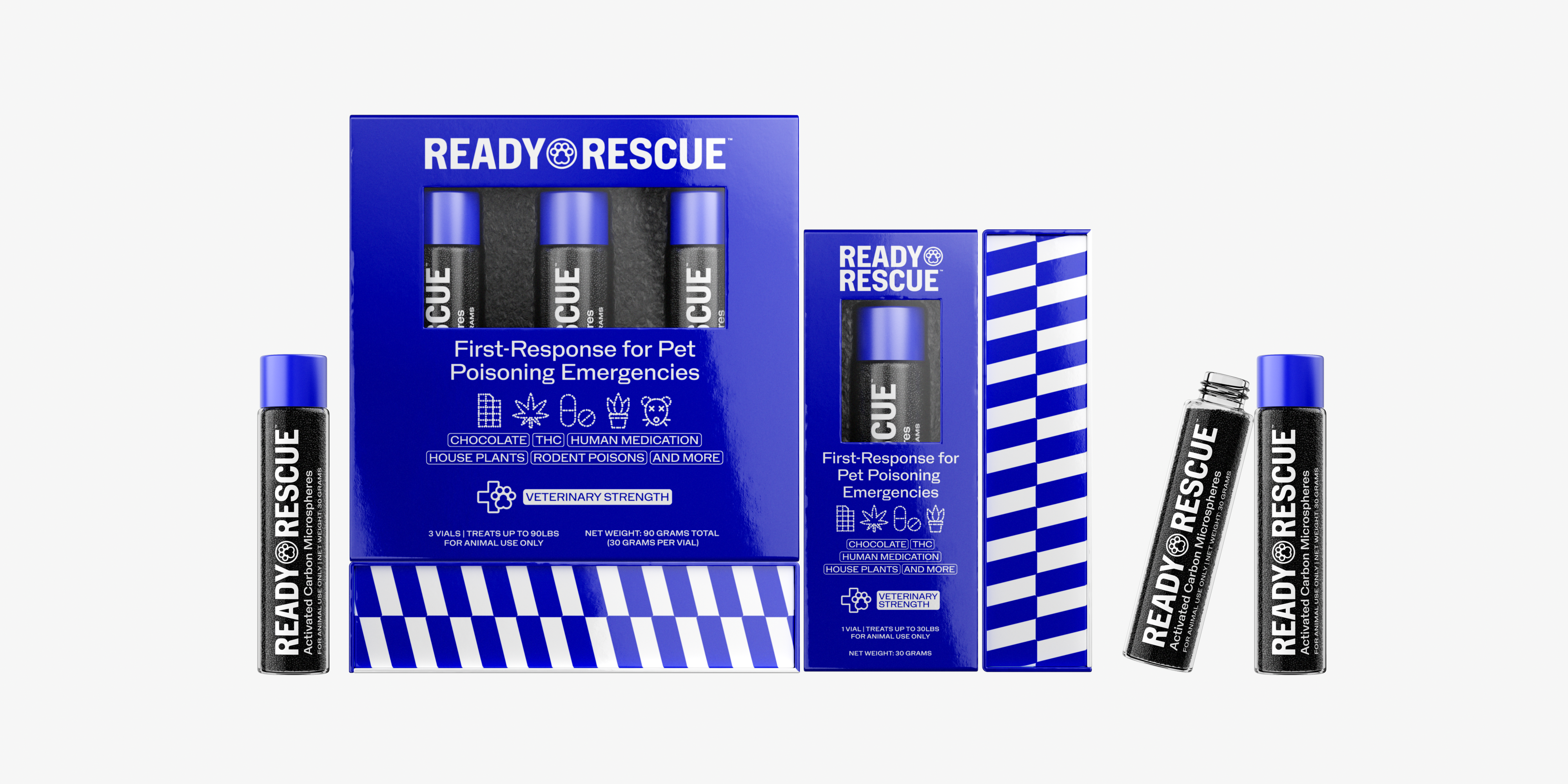
Holiday Toxicity Season Is Coming. Activated Charcoal Doesn't Have to Be the Messiest Part of It.
For veterinary teams, the holidays bring a familiar increase in opportunities for accidental toxin ingestion. Chocolate remains one of the most common pet exposures reported to poison-control centers, while human medications, foods, and supplements routinely rank among the leading causes of pet poisoning.

Behind The Scenes of The All Things Veterinary Podcast
To celebrate the release of ATV season 3, we’ve taken a step back to speak with show host, Patterson Territory Manager Jimmy Dorough, about the creative process, the collaborative nature of the project and what we can expect from the new season.

4 Ways to Avoid Common Compliance Pitfalls
We’ve got recommendations to help you avoid the most common OSHA compliance pitfalls and safeguard your employees’ health and wellbeing.